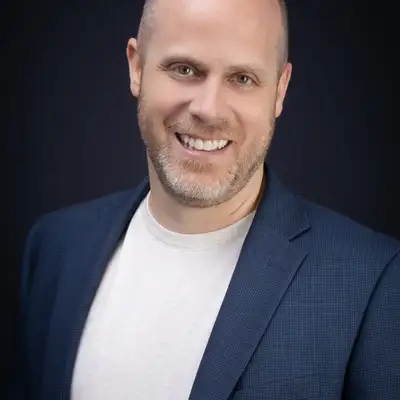
From Rick Rubin to Gene Simmons: The Wild PR World of Brian Gross
Speaker: Welcome to Inside
Marketing With Market Surge.
Your front row seat to the
boldest ideas and smartest
strategies in the marketing game.
Your host is Reed Hansen, chief
Growth Officer at Market Surge.
Reed Hansen, MarketSurge: Hello
and welcome back to Inside
Marketing with Market Surge.
Now, today we're sitting down with a true
heavyweight in the world of PR and media.
That's Brian Gross, who's
the president of B-S-G-P-R.
over 32 years, Brian has been
the force behind some of the most
recognized names and brands across
music, entertainment, and pop culture.
He's worked with deaf American
Warner Brothers, reprise Electra,
and even produced a reality TV show.
That's reality X the
search for Adam and Eve.
His client roster reads like a hall
of fame of edgy icons and cultural
disruptors, including Gene Simmons,
Joanna, angel, Vixen, media, punk,
rock bully, and even Amarosa.
isn't just a PR pro, he's a cultural
storyteller who's been on the front lines
of shaping how artists, celebrities,
and brands connect with the world.
Brian, welcome to the show.
Brian: I really appreciate it.
Reed Hansen, MarketSurge:
Yeah, my pleasure.
Well, you know, as a candidate
for World's Most Interesting man.
you, have been in PR and
media for several decades.
How did you first get into this
world, and why have you stuck with it?
does it ever get tiresome?
Brian: No, it never gets tiresome.
It never gets boring.
I literally interned at a
Deaf American when I was 17.
I was a senior in high school.
I wanted to get an internship
and most record labels wouldn't
touch anyone in high school.
But I called this label and the
reason I'm in public relations is
the person who answered the phone.
I was the last hiring at the company
would cover for the receptionist.
So she happened to be
in the PR department.
I said, I'm looking for an internship.
And she immediately said, well,
come down, we'll interview you.
And you know, I put on a shirt
and tie and some nice pants and.
From Newbury Park, California down to
Burbank and walked in and literally
the person sat me down and said
you'll never have to wear this again.
There's no, there's no dress
code here at a record label.
And uh, I think that's when I knew.
This was gonna be where I wanted to be.
Uh, and then three days a week I would
intern at Deaf American after school and
just learn so much from such incredible
people who, most of which are still
very influential in the music industry
Reed Hansen, MarketSurge: That's awesome.
Now, so I imagine you have just endless
stories and so I'm probably gonna prod
you to share some, but what do you
think now, as a high schooler, this is
probably like just a wild experience, but
what was like your first like pinch me
moment in, in this world that you like?
Brian: I think it was.
It was being in the elevator
with Rick Rubin at 17 and us both
going from wherever we were at
the bottom of the building up.
And very few words were
said of, hi, how are you?
Oh, I'm, you know, I'm
intern at your company.
Oh, cool.
But it was just that moment of.
Okay.
I'm in, I'm in some pretty
incredible company at this moment
Reed Hansen, MarketSurge: That is awesome.
Brian: There were so many of
those pinch me moments with
different types of artists.
I sat down and was eating lunch,
and this lead singer of a very
famous industrial band at the time
sat next to me and started asking
me questions, and it was like.
I should be asking you the questions.
And when I went home and called a buddy of
mine that I went to school with and told
him who I sat with, his jaw hit the floor.
So there was just a lot of those.
It was being around these
people, but in an environment
that was a business environment.
You know what I mean?
It was, they were there.
If they were coming up to the
label, it was for a specific reason.
And so.
There was chitchat and there
interesting conversations, but
you treated it as business.
So I learned at a really early age
of just, you know, respecting their
time, respecting who they are, treating
'em appropriately but also realizing
they're just as human as I am.
So learning that really young,
sort of was ingrained right away.
Reed Hansen, MarketSurge: So, you
know, you've given me a list of
many people you've worked with and
Brian: Yeah.
Reed Hansen, MarketSurge: in
music entertainment and even
like, et cetera, but are they're
also very well recognizable?
Brian: Yeah.
Reed Hansen, MarketSurge: What do these.
Individuals have in common when it
comes to the PR function, you know,
like how do you approach it across all
these different kinds of industries?
Brian: I mean, the thing is, is that
the basics of public and media relations
is to obviously get the word out about.
Said clients, said people no matter
what it is they're looking to promote.
So the goal is always to you
know, keep my clients happy.
and make sure their time isn't wasted,
and bring them opportunities that work
for them and ultimately increase their
name and their brand recognition.
And, you know, in many cases, hopefully
make them more money, right at the
basics of whatever it is, whatever art
they're selling and move that forward.
So that's been the constant
in regards to that.
It's how do I make my
clients, you know, happy?
Reed Hansen, MarketSurge:
Yeah, That makes sense.
Now the PR function overall, you
know, so I'm a marketer, I'm kind
of adjacent to what you do, but not,
I don't really engage in pure pr.
this, as I understand it, it's changed
quite dramatically with social media.
You know, even this year as we're talking
about like freedom of speech issues
and, you know, people navigating topics
and just like everything being in the
news all the time, what would you say
are some of the main differences in
how you approach PR for your clients
today versus, when you started?
Brian: Yeah.
I think one of the biggest things nowadays
is you can get away with a lot more.
So here's what I mean by that.
So PR is obviously a
part of marketing, right?
Marketing's the whole umbrella.
And PR is, one of the pillars of
set marketing in this day and age.
I always tell clients the worst we can.
We can experiment, we can make certain
announcements we can try certain things.
We can do a lot of things, and here's
sort of the three things that'll happen.
A positive response, great.
We get that out there and, and
we're getting the reaction, we want
a completely negative response.
Well, at first you think that's bad,
but ultimately it's getting eyeballs
and there's usually a pendulum
swing effect to where people jump.
On the negative side.
There's gonna be more people
potentially jumping on the
positive side in defending you.
And then the worst thing
that happens, nothing at all.
and with nothing at all, you've just
taken some time, hopefully not a lot
of money, or hopefully zero money to
put something out there, experiment.
And if it doesn't happen, you just walk
away from it and try something else.
the worst thing that you can do in
this day and age is sit around and
think and ponder and should we or
shouldn't we and this and that versus.
Experimenting, finding out, seeing what
sticks, seeing what doesn't, taking
those risks, looking into an opportunity.
I'm definitely not a gatekeeper.
I'll give my insight, ideas and
opinions, but ultimately I wanna go
out there and see who am I to judge
whether something sticks or not.
There's been plenty of times I
thought something would go viral
and it did nothing, and there are
plenty of times that I was like,
this isn't gonna do anything.
I'd say it to myself and it went viral.
So I've never tried to be that gatekeeper.
I want to find out as much as my
client, if something's gonna stick,
my job is to get it out there.
And so in this day and age, with the
speed of media, with the attention spans
that are nil with the doom scrolling,
we're all guilty of, with everything
that's going on in the world you have
opportunities in whatever brand you're
promoting to go out there and see if.
You can do with it versus sitting
around on a phone call for hours
and hours, having a million ideas.
I'm just not a fan of that.
I'm a fan of ideas.
I'm not a fan of wasting time.
So if we can get out there
and push whatever it is my
clients wanna push, let's do it.
Reed Hansen, MarketSurge: Interesting.
So would you say in these relationships
with clients, I mean like you're
talking about some edgy people that are.
Brian: Yes.
Reed Hansen, MarketSurge: very
cutting edge on the cultural front.
do you find yourself as
more of a moderating voice?
Or are you, more frequently in the role
of pushing them to take, additional risks?
where do
Brian: Aggressor.
Reed Hansen, MarketSurge: Okay.
Brian: I find myself
always to be the aggressor.
I'm always trying to, because there's,
you know, there are expectations
for when someone hires me that you
know, I'm going to garner whatever
attention it is they're looking for.
And I certainly try my best, but.
You don't hire a publicist and
then become famous the next day.
that's not how this works.
It does take time.
Sometimes it's faster,
there's some luck involved.
There might be a phone call or
an email I get that brings an
opportunity for a new client.
That just is great timing.
But ultimately the clients that I have and
have had for a long time, uh, you know,
know that we're building something to
sustain it and to build their brand and
to get that name recognition and to just.
That Google, so to speak, just
rolls off the tongue and is in
everyone's, you know, lexicon.
So those are the goals that I
try to accomplish for my clients.
That being said, in my world, it's
all about being the aggressor.
It's all about being fearless.
Do I get plenty of hate
email and whatnot, tech?
Absolutely.
But I'm used to it.
I mean, I started in the music
industry, so I was working.
You know, if I worked, if I worked
80 bands, let's say, over a period
of time, you would know five.
Another 10 maybe, and then another
65 or so you had never heard of, and
the majority of those were awful.
So the, the amount of music that
I pushed back in the day in the
nineties when labels were signing
bands left and Right, you know?
Yeah.
There was, you know, I
had to push things out.
People would cuss at me for the music.
Then I go to a different space and I
work with some edgier material and you
know, people have their opinions and
they'll take it out on me, which is fine.
I've been dealing with
that for a long time.
I think fearlessness is needed
in certain aspects of publicity.
Reed Hansen, MarketSurge: Hmm.
Brian: You are having to be
aggressive in certain aspects.
I'm not an A-list Tom Cruise
publicist, nor do I ever want to be.
I've certainly handled my share of people
in that regard and worked on projects.
But as far as my day-to-day handling
a-listers and sort of that strategic, you
know PR campaign that you do, I'm good.
There's plenty other firms for that.
But having done that stuff, that's
where you become more strategic.
And less aggressive.
But when people hire me to get their
name out there and to build some
recognition and to really, you know,
push what they're trying to say,
that's when I have to be the aggressor.
Reed Hansen, MarketSurge: Alright.
Well so I'd be interested, you
know, as somebody that's a.
Bit of an entrepreneur, you sell
yourself and promote yourself.
How do you acquire these clients?
I assume that, you know, we're talking
about, very famous people, and I'm
sure you're competing with a lot
of others to get their attention.
how have you been effective
at securing, these deals
Brian: Yeah.
Reed Hansen, MarketSurge: many
famous a-listers, like you said?
Brian: I did the math like a year or
so ago, and over 26 years I've had
over 500, almost 550 clients, which is,
I'm still even in awe of that number.
many of which you might not have heard
of, people come and go in that regard,
but it's always been word of mouth.
I let the work do the talking,
meaning my clients are gonna sell me
better than I'll ever sell myself.
If I'm selling myself, I'm selling
myself through my own words.
But if my clients go, Hey, had a great
experience with Brian and his company,
you should hire him, then that's the best
sales pitch I could ever possibly get.
So there's no advertising on my end.
It's word of mouth.
It's relationships.
People come and go.
You know, I have clients that I'll
work with over a period of time.
part ways and then I
might hear from 'em again.
You know, or so and so will be like, Hey,
this former client of yours called me up,
or current client, uh, I need some help.
You know, I'd love to hire you.
So it's always been word of mouth, but
my job on my day to day is to get my
name and my client's names out there.
So that's where the constant
being aggressive comes in.
You know, to where I'm just pushing
my clients, trying to garner the
attention and the publicity we're
looking for and really go out there.
And at the same time, in this day and age,
I'm on this podcast as much to promote
myself as anything else and to educate and
to hopefully give a little insight, maybe
entertain, but ultimately, yeah, we live
in a world of 5 million plus podcasts.
And I was just emailing with a client
of mine who was not sure about doing
one, and I said, listen, at the
very least, it's great practice.
You never know who's on the
other end watching this.
And it just takes one person to
watch this and go, Hey, I wanna
work with you for that time spent
on the podcast to be worth it.
Yeah, yeah.
What are you, what are you risking?
X amount of minutes or an hour
of my time but ultimately.
I'm now gonna hopefully
develop a relationship here
with you and move forward.
And I'm gonna be in your thoughts
and whatnot and be like, oh,
Brian would be a good fit.
And likewise, I'm gonna be sending
your information to people that I
think should be on your podcast.
So, as you know, it's all relationship
driven, whether it's pr, whether
it's marketing, whether it's sales,
it's all relationship driven.
And in this day and age.
With the shorter attention spans,
with the doom scrolling, you just
have to be a little more aggressive.
It takes more work.
And honestly, that's a work ethic thing.
I've never had a problem with that.
Some people do.
The greatest client I ever had
in that regard was Gene Simmons.
I've never seen a work ethic like him.
He and I would battle too.
Don't get me wrong, uh, he's not
peaches and cream, but he's honestly
one of the hardest working human
beings I've ever been around.
I learned so much from
him and appreciate him to.
Reed Hansen, MarketSurge: Interesting.
Okay, so now, I mean, just
your roster of clients.
and when I think of people like Gene
Simmons or, you know, I know you've
worked with like Lollapalooza and, and
frequently they're very proactive in
like, they create stunts or events or
declarations predictions, whatever, you
know, like what are some of these like
stunts that you've seen that have really
like, resonated or, or particularly
stuck with you over the years?
Brian: I mean, I wouldn't say stunts
as much as things that have happened.
You know, Gene Simmons wrote a book about
the human history of prostitution, right.
This is Kiss.
We're talking about Gene Simmons, but
he's decided to write this book and
ultimately we did three days of media.
He did CBS morning news, we did
Fox, we did all the major tv, we
did all the major radio at the time.
The book came out 2009 ish.
And so the topic itself was sort
of one of those where it's like.
Media probably wouldn't touch it,
but because Gene's name was behind
it and they want it, gave him
an opportunity to interview him.
We did book signings, we did everything.
So it's, I, I'm not a big, fan of
stunts, but I am a big fan of like,
Hey, if you can push the envelope,
people are gonna have interest.
Not the biggest fan of lying
though, because you will get caught,
someone will out you and in this
day and age, what the internet.
Shows all.
So there are things you could have
gotten away with, but I look back
at my time at Lollapalooza on that
tour, and this was, I was very young.
It was the 94 tour, and that was one
of the biggest tours ever because you
had the largest acts in the world and
they were supposed to have nirvana too.
So that obviously didn't happen.
When it comes to the word stunt, it's
really about what can you give, you
know, I've worked with all kinds of
different brands and companies that
we've sat and you know, you'll have
your April Fools, you'll do Valentine's.
Uh, you might do spring break stuff.
I've certainly done stuff like that.
You'll time things up.
Obviously, we live in a world where
every day is a new holiday, right?
You know, it's whatever day
it is, donuts, what have you.
So you run with those.
sometimes they lead to something.
Certainly there were times where
taking a risque company and offering
it as a name of a stadium, right.
You know, that's gotten publicity.
Uh, I've done a lot of stuff
or I've had a lot of clients.
Involved with TMZ and having articles
there and watching those go viral.
These days it's more like the Daily
Mail is one of the largest publications
in the world, and having clients in
there and watching that go viral,
but honestly, it's their stories.
It's what they have to say.
It's who they are that ultimately
make it interesting and have
that potential going viral.
Reed Hansen, MarketSurge: So, you know,
I imagine a lot in my audience or, you
know, as in awe me and, you know, just
like kind of hungry for gossip and
whatever, but, you know, like, you know,
everyday business, you know, like you
know, a brand of any kind are these the
kinds of organizations you'd work with?
Do these same principles
apply that you've described?
Brian: I think so.
I think they apply to all businesses.
You know, I think when it comes
to basic pr, you have strategic
and you have aggressive.
But ultimately whoever you are,
you have competition, right?
It doesn't matter what business you're
in, there is someone else out there.
I'm of the sport mindset.
I'm a sports junkie and
have been my entire life.
So competition is vital.
It's healthy, it's necessary.
In your personal life and in business
to sort of survive in advance.
Um, so I believe no matter how vanilla
the brand could be, you have competition
and you have to outshine them.
So what are you gonna do to
outshine your competition?
And that's where you can let
your creative juices flow.
Reed Hansen, MarketSurge: Okay.
Well, you know, I love that advice
and I, I think you definitely.
You know, using the words aggressive.
You know, I think this is a
pretty energizing approach
and I really appreciate that.
You know, let's talk about the future.
Obviously AI impacts just about
everything we do and, you know,
there's a world of influencers.
You know, the quote unquote
mainstream media is so much more
fragmented than it ever has been.
Where do you see PR heading in light
of all these changes and maybe others?
And how should we prepare or adjust?
Brian: I think we're
gonna need a human aspect.
When it comes to media.
It's gonna be necessary because
you really have to ask yourself,
and some publications are starting
to go this route, is that, do we
want all of our news get fed to us?
Whether it's print, tv, online media,
radio, podcast, do we want it fed via ai?
That's a slippery slope.
Now, ai, the technology is
obviously gonna keep improving
and it's already helpful, right?
We use it in our everyday lives.
I use it in my business.
We all use it.
But that being said.
We need a human aspect.
And so that's gonna be the challenge
as we move forward, because obviously
we're all hearing about AI takeover and
everything we do, and I don't know if we
wanna be like the people on the spaceship
in the movie, Wally just sitting there
getting fat and just taking in liquids.
I think we wanna have
challenges and we wanna live so.
There's gonna be pushback,
there's gonna be challenges.
We're nowhere near what AI can do.
And hopefully AI will do
incredible things for humanity.
For earth one can hope, gotta
have a positive outlook.
Reed Hansen, MarketSurge: Right.
Brian: But as far as publicity,
public relations, brand building,
marketing media journalism.
The necessity of human aspect
is gonna be so vital, but
it's going to be a challenge.
But it's no different than
challenges we've always had.
We're literally just stared at First
Amendment challenges in the last week.
We're gonna have more of those.
We're gonna have new challenges that
come up, and AI is gonna be this large
ship hovering over sort of the planet.
As in like, what is this thing gonna
do and what are we gonna do with it?
So it's gonna, it's gonna exist
and, and it's gonna weed out.
It's gonna be very hard for
some and not as hard for others.
So that's the way I sort of take that in.
Obviously that can change
tomorrow, but that's sort of
where I think we're at right now.
Reed Hansen, MarketSurge: Well, Brian,
if somebody would like to work with
you, somebody in our audience where
are the best places to reach you?
Brian: Yeah, it's bsg pr.com.
It's my initials Brian Scott.
Gross Public relations kept it easy
when I started my company back in 2001.
I'm at BSG PR on Instagram,
on Twitter x and bsg pr.com
is my website.
Reed Hansen, MarketSurge: Awesome.
Well, thank you so much
for joining us, Brian.
I think we've learned a lot about PR and
some best practices, and I mean, you've
got a lot of exciting stories to tell,
so I'm excited to follow your progress.
Speaker 2: Want to stay ahead of what's
actually working in marketing right now.
Head over to Market surge.io
and see how we're helping businesses
grow smarter, faster, and louder.
That's market surge.io
because your next breakthrough
shouldn't be a guess.
Creators and Guests