Advertising Is a Guess — Here’s How to Make Better Ones - Skip Wilson
Speaker: Welcome to Inside
Marketing With Market Surge.
Your front row seat to the
boldest ideas and smartest
strategies in the marketing game.
Your host is Reed Hansen, chief
Growth Officer at Market Surge.
Reed Hansen, MarketSurge: Hello
and welcome back to Inside
Marketing with Market Surge.
Today's guest is someone who's seen
advertising from just about every angle.
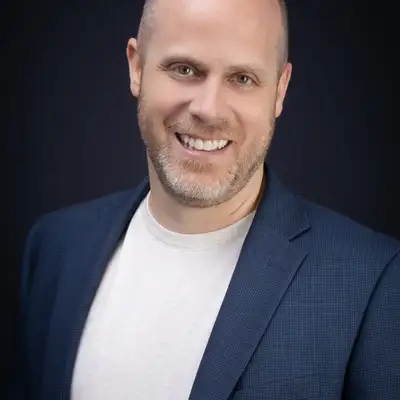
I'm joined by Skip Wilson, the
CEO of Draft Media Partners.
Skip got his start in advertising at 16
years old as a copywriter, which as the
story goes, started as a way to impress
a girl and turned into a lifelong career.
From there, he moved into web design
entrepreneurship and eventually into
the heart of digital media, working on
CNN's iReport team and helping build
new platforms from the ground up.
He went on to play a key
role in building the digital
division at Clear Channel Radio.
Later spent more than a decade as vice
president of digital media at iHeart
Media, where he saw firsthand how
advertising really performs at scale.
Today's Skip is the founder and
CEO of Draft Media Partners.
As I mentioned before, this is
an advertising execution company
serving over a hundred clients
across multiple locations.
Skip is also the bestselling author
and host of the advertising podcast.
Where he is known for cutting through
bad ads, bad assumptions, and bad
marketing advice, skip Welcome to
Inside Marketing with Market Surge.
Skip: Yeah.
Thank you for having
Reed Hansen, MarketSurge:
Yeah, my pleasure.
So I wanna hear the story about how
you started as a copywriter at age 16.
That's pretty early and I understand
that there was some ulterior motives
for taking the job, and I'd love
to hear about how that started and
Skip: Abso,
Reed Hansen, MarketSurge:
led to your career.
Skip: absolutely.
I wanted to be like a writer, right?
And so I was to impress this girl
who's now my wife, by the way.
But to impress this girl,
I was like, oh, yeah.
She was like, what do you do?
And I'm like, I'm a writer.
But then when we started actually dating,
I had to make good on that, right?
So I had to find writing jobs
Of course aren't a ton of those.
Where I am is right between
Charlotte and Atlanta, so there's
actually a lot of ad agencies here.
And so I just started shopping
around and it was actually fairly
easy to get, freelance work
Reed Hansen, MarketSurge: Hmm.
Skip: young as a
Reed Hansen, MarketSurge: Okay.
Skip: every agency, you're always looking
for something that's cool and new and
unique, like when you're an ad agency.
Reed Hansen, MarketSurge: Yeah.
Skip: it was relatively easy
to get a couple of gigs.
And then once you get that, you start
building a resume and portfolio and stuff.
And so one thing turned to
another and that's how it
Reed Hansen, MarketSurge: Interesting.
Skip: how the web design
thing happened too.
They were like, Hey, you're young.
Do you know how to do web design?
And I first said, no, 'cause I didn't.
And then they were like but,
pays $5,000 for this thing.
Which at that time was
like an unbelievable
Reed Hansen, MarketSurge: Right.
Skip: to me.
And so I was like, I'll figure it out.
Gimme a couple weeks.
Reed Hansen, MarketSurge: Awesome.
Skip: a book on WordPress and
then boom, now I'm in web design.
So I stumbled into the industry.
Reed Hansen, MarketSurge: do you
have any early lessons from that
first job, first gig that have paid
off today and you know, today's
world of marketing and advertising.
Skip: Yeah, I would say that some
of the things I learned are, you
know, one, you should never say
you can do something if you can't.
Right.
that was one lesson I learned from them.
But the other side of that is
I think there's also a fear of.
We worry about projects, scope creep
and those types of things a lot as
we always should, 'cause we should
always fight against those things.
But at the same time, there is something
to be said about just saying yes to
every opportunity that comes that way.
there's certain doors that
open up and being more open.
there's both sides.
You know, obviously I was wrong at
that time to be like, yeah, I can do
this website, having no experience.
But at the same time, I did
successfully deliver a website.
we should always just be
cautious on both ends of those.
We should worry about scope creep,
we should worry about saying yes to
things outside of our wheelhouse,
but at the same time, we should
always be growing our wheelhouse,
Reed Hansen, MarketSurge: Yeah.
No, that,
Skip: thing.
Reed Hansen, MarketSurge: that's awesome.
So now, you know, you moved on to
opportunities at Clear Channel CNN,
iHeartMedia, you know, very big
platforms big spend on advertising.
What is something that you know,
maybe a small business owner might not
understand about how this scales, like
how does advertising work when you're
dealing with six, seven figure budgets?
Skip: The biggest difference
is that you have longer.
Payoff times.
In other words, if you're doing a
campaign for, that's a seven figure
campaign for an established brand,
don't necessarily need that to make
a immediate return on ad spend.
So I would say that's
the biggest difference.
If you are a.
Five location roofing company, you
need, you need it to pay off really
Reed Hansen, MarketSurge: Mm-hmm.
Skip: You can't necessarily wait
two years before you get payoff.
that I would say is the biggest
difference is that when you do have
the ability to think in a longer time
horizon, it just allows you to get
more creative and establish a brand.
Whereas branding at a local level
with smaller budgets more difficult.
Also there's some categories that I
just don't think branding that much.
I know that might not be the
greatest thing to say, but you know,
I don't necessarily need to be in
love with my HVAC company, right?
I just need them to come in and
do a good job and then get out.
Reed Hansen, MarketSurge: Right.
Skip: And so there are some
industries that are more inherently
where brand is more important than
Reed Hansen, MarketSurge: Interesting.
Okay.
so maybe if for, you know, smaller,
brands with smaller budgets essentially
avoid the massive effort into brand
building, identity building, and more
just being present, being found at the
right time and by the right people.
Skip: Exactly.
Reed Hansen, MarketSurge: I think
that's pretty useful advice actually,
because, you know, we do look at the
fundamentals often and we think like,
well, you know, we want them to feel
something when they see our brand.
It's probably not with a four figure
budget or a three figure budget.
You don't wanna bother with that.
So,
Skip: Correct.
Exactly.
at the smaller scale, you just wanna
make sure that if you're putting a
dollar in, you're getting three bucks
Reed Hansen, MarketSurge: yeah.
Skip: That's, and not, and immediately
too, at least within the same
Reed Hansen, MarketSurge: Yeah.
Skip: that you can't wait two or
three years before you get that $3
Reed Hansen, MarketSurge: Yeah.
Okay.
So, you know, data's obviously important.
You know, and when we're talking about
looking at advertising, you know, these
are massive spends, massive budget items.
Why do you think that well, and I
guess maybe tell us your experience,
like when you're working with these
large campaigns, are you finding
that they are effectively using data?
is that working better at
scale or you know, what's been
your experience with that?
Skip: So data is something, I honestly
think data is almost more important
when you have a smaller budget
than it is when you have a larger
budget Larger brands, a lot of times
will do stuff just to look cool.
I mean, if you see a Coca-Cola billboard
or something that's a publicly traded
company, a lot of times they are
sponsoring that event for shareholder
values and those types of things
that aren't necessarily designed to
get an immediate return on ad spend.
And when you are doing those kinds of
things, the data you care about is the
vanity metrics and the stuff that doesn't
matter to any quote unquote normal
business or not publicly traded business.
So I would actually say that
data is more valuable and more
important for more immediate ROAS
Reed Hansen, MarketSurge: Hmm.
Skip: And the most important data
In my opinion, I look at every ad campaign
almost like you're trying to build a
Reed Hansen, MarketSurge: Hmm.
Skip: where you're trying
to get it to do this thing.
If it's not doing it, just like
if a printer isn't printing, the
first thing you're gonna do is
is the computer talking to the
Reed Hansen, MarketSurge: Sure.
Skip: Is the printer
getting the electricity?
Is it all these different things?
So you break it up into parts,
and that's the way we should
be looking at campaigns too.
It's is the ad getting good engagement?
If so, it's probably not the
fault that it's not converting.
Let's look at the landing page and
then is the landing page getting good
engagement but not actually converting?
If so, then we've got a copy
issue or a target audience issue.
Reed Hansen, MarketSurge: Okay.
Skip: And so if when you start to
look at those things, it becomes
actually fairly easy to fix a broken
Reed Hansen, MarketSurge: Mm.
Yeah.
Skip: you, I always think in terms
of two week chunks, and if you think
in terms of two week chunks, then
it usually becomes pretty apparent.
Okay, they're getting from here to
here, but this is where it's dying
and they're not getting from here
Reed Hansen, MarketSurge: Mm-hmm.
Okay.
No, that makes sense.
do you feel like, you
know, how are our tools?
Like, is AI helping us in this space?
Like to analyze data better?
is it a distraction from
getting more precision here?
Or what do you think?
Skip: So it's making organic
a lot more difficult.
Like organic is, I would say,
where it's changing things the most
Reed Hansen, MarketSurge: Hmm.
Skip: now because.
I think that the last month there was
a record number of social media posts,
and that's probably gonna be true every
Reed Hansen, MarketSurge: Okay.
Skip: for a
Reed Hansen, MarketSurge: Yeah.
Skip: because it's a lot easier to
automate those sort of like run of the
mill posts and those types of things.
And so because of that, follower
counts and those types of
things don't matter as much.
So if anything, it increases the
importance of paid advertising.
Reed Hansen, MarketSurge: Okay.
Skip: Because otherwise, it's very hard.
if I had a company that I was
trying to get found through my blog,
it's gonna be very difficult for
me starting a new blog right now
because it's so easy to start a blog.
Every website's gonna have the content.
And because of that, Google, I
think wisely is paying as much
attention to those things because.
Reed Hansen, MarketSurge: Right,
Skip: It doesn't matter as much.
And so those are the, that's the
biggest change that I think AI
has made in the paid ad space.
Definitely you should be using it
to help you summarize and look at
Reed Hansen, MarketSurge: Hmm.
Skip: So if you're getting a marketing
report and you're like, I don't even
know what this means, definitely
use your chat ccpt friend to like
help you discern those things.
Reed Hansen, MarketSurge: Yeah.
Skip: And and those things, but also
too, great for headline variations.
It's much easier now to do, really
no excuse not to be running at least
five to 10 different ad copies right
Reed Hansen, MarketSurge: Sure.
Skip: it's just never been
easier to split those things up.
Reed Hansen, MarketSurge: Yeah.
No, that's a great point.
So, you know, you talked about some
other things like, landing pages
and things like that do you have a
framework or kind of rule of thumb of
what a business needs to have in place
before they start spending on ads?
is that a fair way to think about it?
Skip: Yeah.
Reed Hansen, MarketSurge: table
stakes and then we're ready for ads.
Skip: I do actually, yeah, I've got my,
Reed Hansen, MarketSurge: Oh,
Skip: terms of math on
Reed Hansen, MarketSurge: I love it.
Skip: So I actually do
have, this framework
Reed Hansen, MarketSurge: Okay.
Skip: I'll spare, anyone
having to zoom in on this.
I didn't come up with this part of it,
but I came up with the second part of it.
The first part of it, the people,
process and product, like you need
to have those things in place first.
And what this little equation is people,
plus product, plus process in parentheses,
and then multiplied by distribution.
Distribution is what advertising
helps with getting the word out,
getting your message distributed.
But if you don't already have a clear
product offering, if you don't already
have a clear idea of who your customer
is and who you're engaging with.
You don't have a clear way
to fulfill those things.
You really shouldn't be running
Reed Hansen, MarketSurge: Hmm.
Okay.
Skip: We have done campaigns before where
we've generated leads and then we go, Hey,
how is the lead quality on this campaign?
And then they're like we haven't
called them yet because we
don't have x, y, Z in place.
And I'm like, you shouldn't
have been running ads
Reed Hansen, MarketSurge: Yeah.
Right.
Skip: but so those things, if you've got a
clear product offering and a clear idea of
who your customer is, then I think you can
start looking at doing some sort of paid.
Reed Hansen, MarketSurge: Okay.
Interesting.
Now you know, so, you know,
confession here, you know, we run
ads, but for our specific business.
I've actually turned off,
ads, for my business.
Even though we're running ads on
behalf of many of our clients.
we stopped it for advertising market
search, the agency, you know, I
was just finding that the, cost per
acquisition was pretty high, and so I
Skip: Yes.
Reed Hansen, MarketSurge: Now, in
general, if a business comes to
you and says, I'm not feeling like
ads are right for my business.
They just don't work for my business.
what are things that
you might say to them?
Skip: Yeah.
So I will say, first of all, B2B
service is the hardest type of lead gen
Reed Hansen, MarketSurge: alright, thanks.
Skip: that's, yeah, exactly.
So you're in a safe,
you're in a safe space.
it is also an industry though,
where you can hold usually a
higher customer acquisition cost.
In other words, you could probably
hold a $500 acquisition cost or
Reed Hansen, MarketSurge: Mm-hmm.
Skip: Whereas in a lot of, in, if,
when we're working with a sandwich
company which we have a couple of
sandwich franchisees, they can't
have a $500 customer acquisition
Reed Hansen, MarketSurge: Right.
Skip: it would take quite some time to pay
Reed Hansen, MarketSurge: Right.
Skip: But that is, when I think of
advertising as a specific message
to a specific audience to achieve
Reed Hansen, MarketSurge: Mm-hmm.
Skip: result.
And that really works for every industry.
it's always trying to figure out
who is my audience and what am I
trying to get them to do, and then
what do I need to say to them?
And so for you let's say that
I, let's pretend that I was
doing ads for market search.
I would actually almost encourage
figuring out who your target
audience is, and then running ads of
people to apply to be a part of the
Reed Hansen, MarketSurge: Mm-hmm.
Sure.
Skip: And that be your
customer acquisition.
'cause then you're spending
an hour with people.
Reed Hansen, MarketSurge: Yeah.
Skip: It's, you're
appealing to, there you go.
Which, CEOs and business owners and those
things, it's much easier than asking
for an appointment to talk about their
Reed Hansen, MarketSurge: Right,
Skip: And that's, then now you've,
you're building up a list of contacts.
Reed Hansen, MarketSurge: Yeah,
Skip: 'cause obviously if they're
applying to be part of a podcast, they
want exposure and those types of things.
So it self qualifies and
then you can work for those
Reed Hansen, MarketSurge: absolutely.
Skip: it's just being creative in those.
I think, you've got two levers.
You've got the message and
Reed Hansen, MarketSurge: mm-hmm.
Skip: the only two levers advertising.
And so tweaking those two things to get
that result, you can do that for anything.
Reed Hansen, MarketSurge: Yeah.
No, that's great.
I appreciate that.
Now, I've seen this phrase pop up
in your writing draft mentality.
So use that phrase, a lot.
What does it actually mean in practice
and how does it change how a brand
might approach their advertising?
help get us up to speed.
Skip: The idea of a draft mentality is
just the idea that it's never finished.
when we start an ad campaign, I feel
like a lot of times when someone comes
to us, with a need for, let's say it's
a roofing company and they need 30
leads, we put together the campaign
based off of industry standards and
those types of things, and we are able
to predict, for a $2,500 budget, this
should be how many leads you should get.
This is how many of those should
convert to paying customers.
But that's always based off
of industry, like something
performing at the 50th percentile.
Usually when you start a campaign, it's
not gonna perform in the 50th percentile.
It's gonna perform below
that 'cause it's new.
And so I think a lot of times as
marketers, we get nervous about
being upfront about that because
Reed Hansen, MarketSurge: Yeah.
Skip: give this, we are
the experts we should know.
Reed Hansen, MarketSurge: Right.
Skip: the reality is that it just
takes a, a few rounds of guessing
and tweaks to get something to.
Where it is performing average
and then above average.
it takes months.
It should take about four to six weeks.
But still I always, that's
the draft mentality.
The idea that it's always
willing to change and push new
things and being willing to go.
I think this platform is,
let's swap out this platform.
Let's move it over here.
We wanted to build, when we were
building draft, we wanted to make
sure that we were platform agnostic
Reed Hansen, MarketSurge: Hmm.
Skip: so that we didn't have a
preference for over digital or one
thing over another, so that we could
always plug and play and move things
around without, it benefiting us
more in, in one area than the other.
Reed Hansen, MarketSurge: it.
Skip: that's the draft idea.
Reed Hansen, MarketSurge: Okay.
Skip: idea that it's
always could be improving.
Reed Hansen, MarketSurge: No, I
think that's wise and you know,
you make an excellent point.
I've been in that situation so
much, you know, like new client,
we're trying to make a, a impact
early, but like, advertising does
not lend to that hardly at all.
Like, it, you know, we need
a few iterations of learning.
Even if it's just a few days, you
know, like, we need some data, but data
only happens when we do or publish.
And so, yeah.
No, I think that's great.
So that's a really good insight.
So you also do software
development, and you've won some
awards for software development.
Where do you see certain tools or
services falling short, and what do you
think that, businesses and brands should
really demand from their tech stack?
Skip: so our software that we built,
we originally launched as a SaaS.
Reed Hansen, MarketSurge: Mm-hmm.
Skip: let's build this, advertising
predictive tool where you say,
Hey, I've got this target audience
and these five zip codes or
whatever, and here's our budget.
And it would predict out, the
cost per lead and here's what the
media mix should be in that market
with that audience and so forth.
The idea was we would sell that to
Reed Hansen, MarketSurge: Okay.
Skip: And that would be the business,
Reed Hansen, MarketSurge: Yeah,
Skip: because I feel
like that's the missing
Reed Hansen, MarketSurge: I,
Skip: All that information exists out
Reed Hansen, MarketSurge: yeah.
Skip: but there wasn't like the
clear, clean piece, but then what
we actually learned was that they
actually needed help too with hands
on keyboard to actually run the ads.
And so we pivoted to being ad fulfillment,
Reed Hansen, MarketSurge: great.
Skip: we still very much
use draft predictive tool.
almost every way.
But one of the biggest changes that
we've made to it is that the first
version of it, AI didn't, or AI
existed, but we didn't have access to
Reed Hansen, MarketSurge: Uhhuh, right.
Skip: when we first built the tool.
So what we've done now is just put
a chat on top of it so that it,
whereas it used to take us about
30 minutes to map out a campaign.
Now, you can just talk to
it and it will spit out.
it will give you the answers.
Reed Hansen, MarketSurge: Yeah.
Skip: one of the biggest ways
that our tool has changed is just,
putting AI into the mix so that
you don't have to spend 30 minutes.
It was very much like Figma where you'd
have to pull over a landing page and
then it would run the math to figure
out what the conversion rate likely
is and all those different things.
Now, just does all that instantaneously.
Reed Hansen, MarketSurge: That's awesome.
Skip: so faster and easier, I
would say is the biggest changes.
Reed Hansen, MarketSurge: Okay.
Awesome.
Skip: in tech stack world attribution
for things like our other tool basically
takes ad logs and exposed IP addresses.
And then we match those
to physical addresses
Reed Hansen, MarketSurge: Okay.
Skip: and then we that with website
data where when someone says yes to
sharing their location, we're able
to put those two things together.
So for that, you can get ad
attribution for even things like
OTT and those types of things.
'cause, they saw the ad in the household
and then that person became a customer.
It allows us to do attribution
on things that you otherwise, you
know, normally very hard to, because
you can't click a Hulu ad in those
Reed Hansen, MarketSurge: Right.
Okay.
Alright, well second to last question.
Okay.
Tell us a hard truth about advertising
that most business owners would not
want to hear, but really need to.
Skip: It goes with the draft
Reed Hansen, MarketSurge: Okay.
Skip: which is
Reed Hansen, MarketSurge: Yeah.
Skip: all a guess.
no matter how.
Even when you're dealing, like we have
several clients that are franchises.
Even if it's the same concept, the same
franchise, just different locations,
still, you're getting a little better
at being able to predict, and you
know, a little bit better what works.
But every market is different, and
every location's a little different.
So even when it's that
similar, still taking a guess.
Reed Hansen, MarketSurge: Yeah.
Skip: That's why it's, I always
say, your first two weeks, you're
probably not gonna be, it's probably
gonna perform a little below average.
the hard truth no matter what, because
you are ultimately guessing that.
I think this is the message to the who
we think the audience is them to do the
thing that we think we want them to do.
But all of those things are guesses.
Reed Hansen, MarketSurge:
Well, well, awesome.
So skip, you have a good
way of explaining things.
I think this is going to be a very
Clippable podcast, which I'm happy about.
Can you tell us if people
would like to learn more work
with you or just talk to you?
Where are the best places to find you?
Skip: Yeah.
So I'm like a curmudgeon
as far as social media.
For the most part.
The best way to reach out to
me personally is email Skip at
either draft media partners.com
or draft advertising.com.
Reed Hansen, MarketSurge: great,
Skip: go to me, and then
through our website.
Okay.
Reed Hansen, MarketSurge: great.
Awesome.
Well, I will include the, link in the
comments, the show notes, and, you
know, I'd recommend reaching out to
skip, obviously like a lot of great
resources here, a lot of knowledge,
and, you know, both at scale and at the
small and medium sized business level.
So this has been a great podcast.
Thanks so much for coming on, skip.
Skip: Yeah.
Speaker 2: Want to stay ahead of what's
actually working in marketing right now.
Head over to Market surge.io
and see how we're helping businesses
grow smarter, faster, and louder.
That's market surge.io
because your next breakthrough
shouldn't be a guess.
Creators and Guests